If You Paid Money for Art Is It Yours Permanently if You Paid Money for Art Is It Yours?
Copyright Registration Law and Your Fine art
Pros and Cons of Registering Your Art
Pretty much all artists believe their art is automatically copyrighted the instant it's completed and protected from acts of infringement-- and they're right, it is. According to Us Copyright Police force, and quoting from the copyright.gov website, your art is considered copyright protected from "the moment information technology is created and stock-still in a tangible form that information technology is perceptible either directly or with the aid of a motorcar or device." Sounds like everything'south peachy and you lot're covered, correct? Not and then fast.
Yes, your art is automatically copyrighted, but believing that no farther activeness is necessary in terms of formally registering it with the The states Copyright Part tin be a major mistake. According to Copyright Law, formally registering works of fine art is far more advantageous over not registering them in several very substantial ways. Before getting into specifics hither, be aware that only certain types of art are probable to exist infringed upon. Virtually art has little or no appeal to infringers. Why? Because infringers well-nigh always do what they do to make money, and tend to only steal images that are capable of generating income in 1 mode or another. Still the opposite tin also take place-- where infringers have images to utilize on websites or in moving-picture show sets where the benefits or profit potential may be less straightforward. No matter what the circumstances, the broader the appeal of your art and the easier your imagery and compositions are for people to recognize, empathize and appreciate (and advisable), the more concerned yous should be nearly registering them. This is especially true if your images are so bonny that people actively attempt to take and display them in various ways.
Now should all artists register every single piece of work of fine art they create? Not really. In fact, few artists are truly at risk, especially those who produce more than abstruse or conceptual works, art with substantial cognitive components, art that's difficult and nonproductive from monetary standpoints to copy or reproduce, and fine art with limited commercial appeal. The basic question you should ask yourself is this-- "Am I vulnerable to someone taking my fine art, copying and reproducing it in a big way and making lots of coin?"
The artists who accept to be well-nigh concerned about infringement are those whose images or designs have somewhat of a mass or commercial appeal, and are easy and conducive to being copied-- specially onto other mediums such as T-shirts, java mugs, shoes, bags, skateboards, or similar types of mass-produced merchandise that accept the potential to be salable across wide ranges of the population. Having a large online following may be a determining factor too. Also vulnerable is art with creatures, characters or settings that could conceivably be "borrowed" and replicated in films, blitheness, comics or video games... or even in the work of other artists. Having a large online following may be a determining factor as well. If you've got a respectable fan base and make art with any of these characteristics or components, registering the copyrights is mostly recommended.
Another indication that copyrighting your art would exist a skilful thought is if you've developed a particular type of look or limerick or subject matter that is identified as being uniquely yours, peculiarly if it's becoming increasingly popular with collectors. Although y'all can't register "style" itself, you can register any number of works of art that are done in your own unique style. This protects you lot confronting infringers who decide to copy i or more of them for their ain personal benefits. Imitation is the sincerest form of flattery, they say, just if information technology begins to backbite from your lesser line, then defending your interests will likely go necessary at some point. And the sooner you recognize that a possibility exists for appropriating and capitalizing on your artworks, the improve.
So OK-- allow's become started. Why become through the process of formally copyrighting your fine art? Four basic reasons:
one. Suppose someone reproduces some aspect or characteristic of your fine art without your permission. If the art was not registered prior to the infringement, you lot are express to the infringer's profits as your damages. For example, if an infringer prints your fine art on T-shirts, sells 500 of them and makes a clear profit of $10 per shirt, you lot're limited to that $5000 profit every bit the amount you can recover (if that $5000 profit is before costs, your limitation volition be fifty-fifty less-- that is, whatever turn a profit remains afterwards subtracting all costs of production). If on the other manus, you accept registered the fine art, you are entitled to "statutory damages" of upwards to $150,000 per willful infringement, and you can elect to accept that instead of bodily amercement (a articulate selection in our hypothetical T-shirt case). Statutory damages are punitive in nature, but only available as an option to you if y'all register the copyrights on art before the infringement.
2. If the art is registered prior to the infringement, so in addition to statutory damages, the court is authorized to award you attorney's fees plus other incidental costs of litigation. Y'all are not entitled to obtain a judgment that includes these costs or fees if the fine art was non registered prior to the infringement.
three. If a piece of work of your fine art is infringed on and it'south not registered, you accept to become ahead and annals it anyhow before you tin can bring a copyright action in federal court (file a federal case). And so you see, y'all aren't saving annihilation by non registering it in advance-- it has to be registered regardless if yous intend to have legal activeness; registration is a procedural requirement in that regard.
4. Registering your art in advance of an infringement proves prima-facie that you created the image when you lot say you did. In other words, the registration documents institute sufficient evidence to prove the art was created before the infringement. Without a prior registration, the date of creation could be contested; the infringers could maintain that you lot actually created it afterward than yous did. So it all shakes out like this... With prior registration, the brunt of proof is on the infringer to demonstrate that they created their work either earlier or independently of you creating yours. Without prior registration, the brunt of proof is on you to demonstrate that you created the work start, and that they willfully appropriated it for their ain purposes without your consent. That'southward a huge difference.
For these reasons, attorneys are far more likely to have infringement cases on a contingency fee footing when the art has been registered prior to the infringements. Resolving claims on registered works of art is ever easier for attorneys and copyright holders considering the documented prior registration constitutes conclusive proof that the creation of the art predated the infringement. Attorneys have far greater leverage moneywise as well, particularly in terms of being able to seek statutory amercement and be reimbursed for their fees. On the flip side, attorneys tend to avert cases involving unregistered art, especially on a contingency basis, considering not simply is the total award limited to corporeality of profit made by the infringers, but without prior registration, proving the creation of the art predated the infringement tin besides become complicated. Either the amount of turn a profit made by infringers has to exist large enough for attorneys to consider taking a case on a contingency footing or they will look y'all to pay their costs and fees out-of-pocket as the case progresses.
Whether you decide to register your fine art or not, the least yous can practice is to make your copyright clear to everyone concerned. Place a find on your website that all images are copyright protected. This notice should include the copyright symbol (c), the year (very of import) and your name. Place copyright notices on each private work of fine art as well (you lot can exercise this either on the front, or on the dorsum if yous feel the notices might in some way disharmonism with the compositions).
Procedures for registering your copyrights are across the scope of this article, merely here are a few quick tips on where to go and how to get started:
Go to www.copyright.gov. Click "Register" link merely below the top menu bar. That volition take you to a page where you click a link to the type of art you lot create (Visual Arts, for most artists). Regarding options for filing, doing so online is far superior to filing by mail, with the unabridged process taking about 2-3 months from offset to finish. Registering by mail can take two years or longer. For online registration, click the link below the "Electronic Copyright Office (eCO) Registration Organisation"-- "Register a Visual Arts Work"-- and follow the instructions. You lot will either take to sign in if you already accept an account, or create an account if you're a first time user just starting out. Then simply follow the instructions to annals your specific type of art.
For oftentimes asked questions about copyrights go here.
Those of you with multiple works of art to annals tin can take advantage of an option called "batch or grouping copyrighting" which allows you to copyright any number of related pieces in a single filing, no thing how many artworks are involved. The following link provides complete data almost copyright services and fees.
***
Thanks to MJ Bogatin of www.bcgattorneys.com for his generous assistance with this article. He's an intellectual property attorney with emphasis on arts and entertainment. Thank you also to Mat Gleason and to David Trulli for their assist.
Disclaimer: Please be enlightened that I am not an attorney and that the contents of this article should in no way be construed as legal advice. If you have whatever questions of a legal nature, consult an attorney.
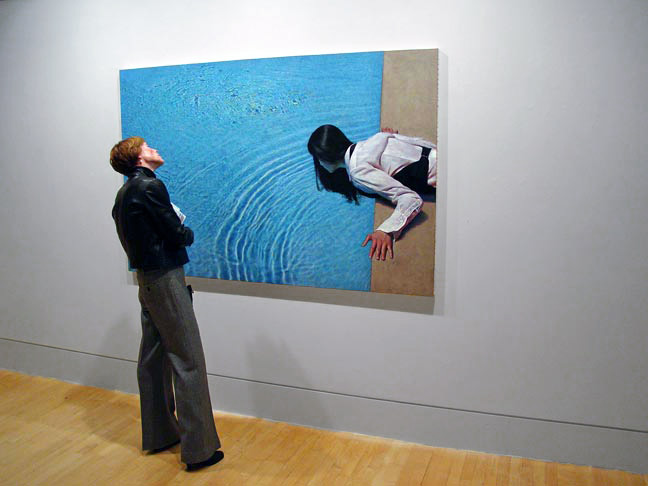
(art by Valentin Popov)
Source: https://www.artbusiness.com/register_and_copyright_art_for_artists.html
0 Response to "If You Paid Money for Art Is It Yours Permanently if You Paid Money for Art Is It Yours?"
Publicar un comentario